
[P@CMU] How to add AI into your product, the right way ✅ + NYC meetup, waitlist open for our event @ Autodesk!
Our Autodesk event has been in the works for months, and we're so excited to invite y'all to come!

Hey everyone,
Hope everyone is enjoying the summer — y’all have no excuse to have a lack of vitamin D this season! While you have all been outside touching the grass, what have we been up to????? Here’s what your favorite newsletter editors have been doing:
Anna Li: I recently went bar hopping around the Castro district in SF! I went so hard that I’ve been in a knee brace all week lol I have knee problems. :( If that’s your thing, I would highly recommend going to Toad Hall!
Ankit Sanghvi: I’ve been researching the market in the AI voice agent automation space. Most recently, I learned the ninja technique of meal prepping - to cook meals for the week, in under 1hr.
Karthik Ram: I’m excited to be building new products at PayPal! I’ve been busy discovering and indulging in Mexican and Indian cuisines in Austin, Texas.
Snigdha Gupta: I recently started working on improving customer satisfaction for Developer Productivity at Autodesk. I’ve been having too much fun with my intern cohort!
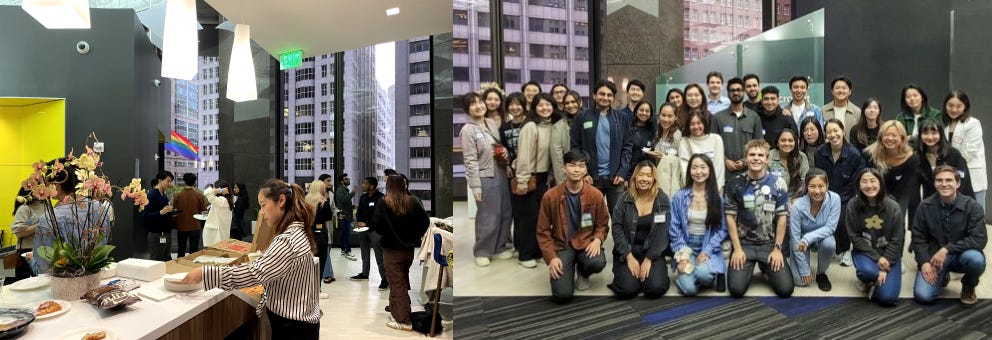
AND a big thanks to everyone who came out for our first P@CMU x PM Social Club and P@CMU Inner Circle events! We loved having you!
How to add AI into products, the right way ✅
Hi! My name is Ankit (you met me in the first paragraph!) and I’ve spent the last year researching how to build the best AI product.
A lot of you are working on bringing delightful AI experiences to your products. And we get it — it’s a massive value add, we want to seem ahead of the curve, and most of all, it’s cool. So I read the whole Google’s People + AI Handbook and summarized our key takeaways below (with some helpful screenshots!). Here’s our 5 key-point checklist to bake AI into your products, the right way.
Highlight benefits over technical details. Encourage experimentation and reassure users that experimenting won’t dictate their future experiences.
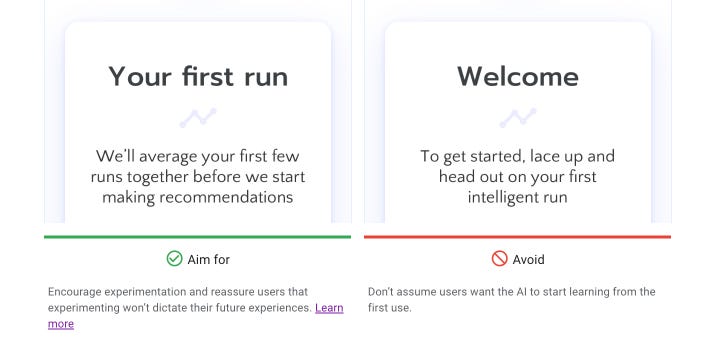
When building AI products, ensure they add real value. This sounds obvious, but with the recent hype around generative AI, it’s not uncommon to see people using AI just because they can. What people don’t realize is that some tasks are better done manually.
Use AI for: personalized recommendations, predicting events, natural language understanding, image recognition, and generative tasks like content creation and design.
DON’T use AI when:
Personal responsibility for the outcome is required or important. If you deliver content that is clearly AI, even if the content is good you lose social capital/trust with them — if they wanted AI, they would’ve done it themselves.
The stakes of the situation are high. When in high-stakes situations, errors can be particularly problematic, and can corrode user trust and potentially cause dangerous situations.
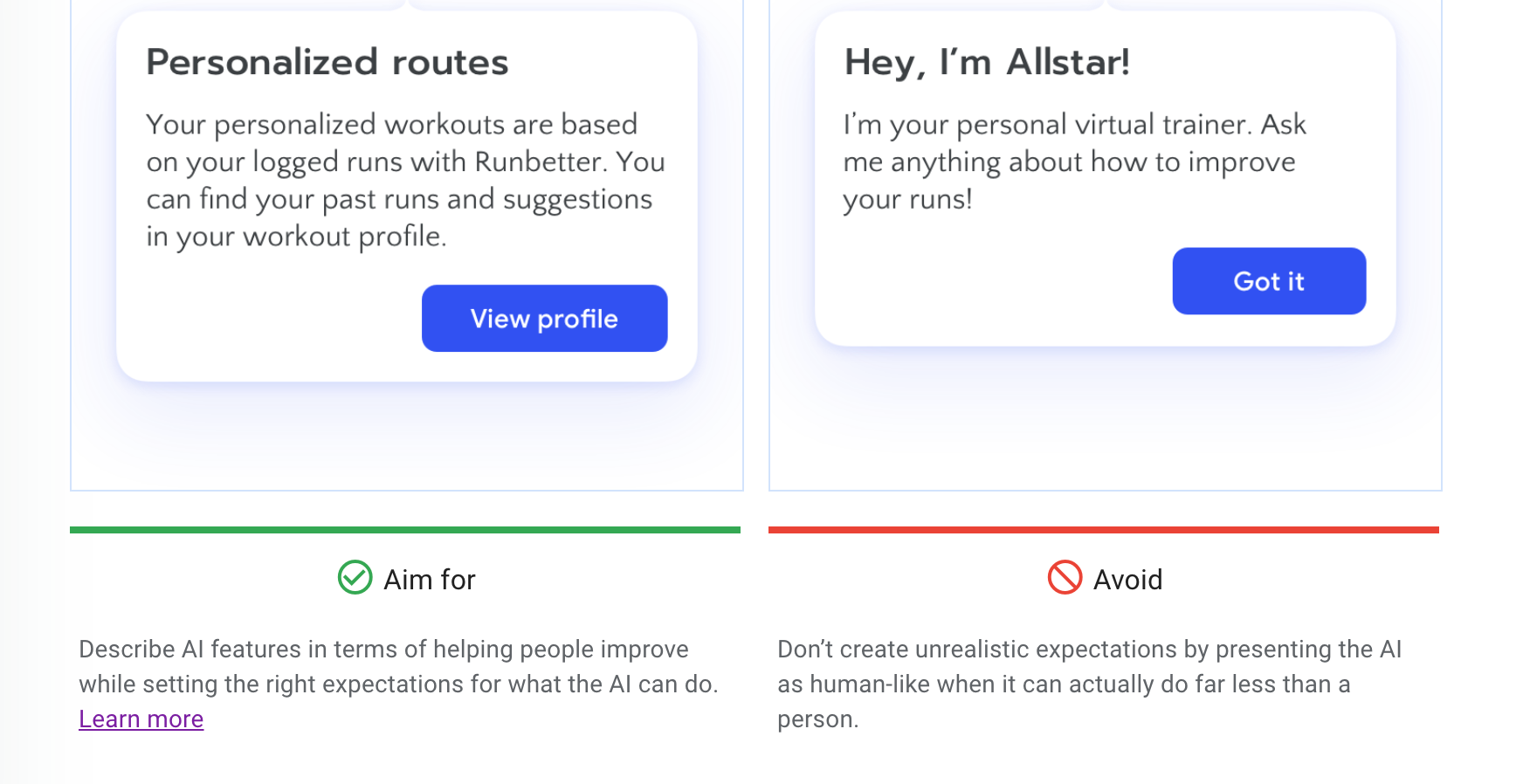
Clearly communicate AI's capabilities and limitations to users. AI-powered systems can adapt over time. Prepare users for change—and help them understand how to train the system.
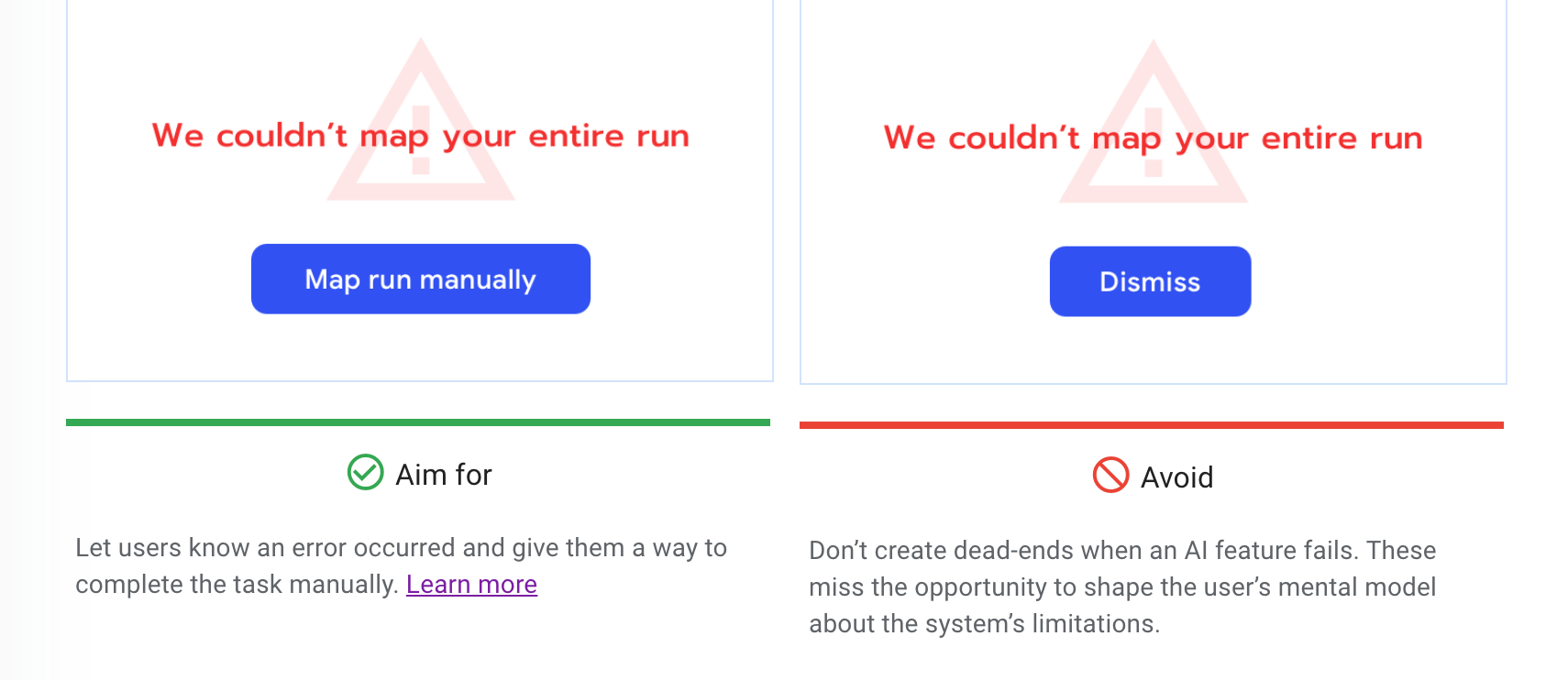
Plan for errors and have strategies to address them. For example, if there’s missing or incomplete data, don’t just leave it at that; allow the user to add the data in themselves.
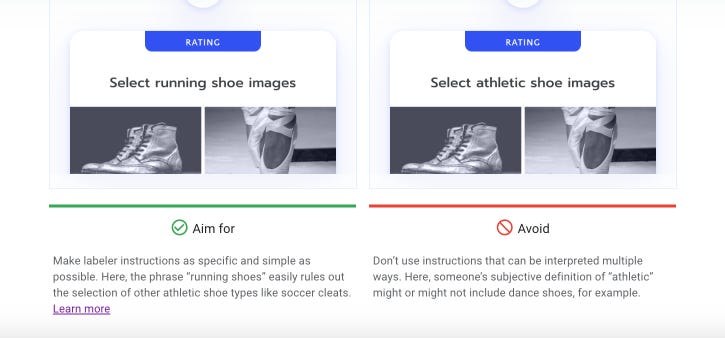
Invest early in robust data practices to ensure quality outputs. For example, if you’re asking users to label data, make sure you frame your question so they answer as objectively as possible.
But utility is not everything. Another pillar is ethics in AI - it is crucial to prevent biases and ensure fairness. AI products must be designed to respect user privacy and avoid discriminatory outcomes. Amazon's Alexa highlighted ethical concerns when users reported instances of Alexa recording conversations without explicit prompts, emphasizing the need for strict ethical guidelines and transparency in AI development.
Job board 🏦
From the P@CMU community:
Product Manager - Risk @ PayPal | POC: Arpit Kumar (CMU Alum) | Link
Lead Product Manager @ PayPal | POC: Karthik Ram (CMU Alum) | Link
The recruiting tip we found the most useful this week: a hiring manager’s advice on how to prioritize quality over quantity in applications.
Upcoming Events 🚀
P@CMU Inner Circle: NYC Edition
When: Sunday, July 14th 3pm-6pm
Where: Felix Roasting Co. 450 Park Ave S, New York, NY, 10016
RSVP: https://lu.ma/50wazyru
Product@CMU - CMU's largest product community is hosting its first-ever alumni event in NYC! POC: Kinshuk Dudeja
Bond with fellow Tartans working in Product, Design and Tech over a cup of coffee!
P@CMU x Autodesk: Navigating your Early Career in Product Management
Where: The event will be held in-person at Autodesk HQ in San Francisco.
When: Timing is set for late July.
RSVP: Join the waitlist here. POC: Snigdha Gupta
We’re excited to partner with Autodesk, the original trailblazers in product development. Their core products, AutoCAD and Autodesk Fusion, have been the industry standard for 3D modeling, manufacturing, and product design for the past couple of decades.
In our event, PMs at Autodesk will share how they’ve been experimenting with generative AI, their thoughts on the changing landscape for product development, and how they found success as a PM through from their unlikely roots.
P@CMU Alumni Spotlight: Rajesh Ranjan 🤩

This month, we have the pleasure of featuring Rajesh Ranjan, an alumni of our very own MS in Product Management program. Rajesh has been instrumental in driving innovation and growth at several top-tier organizations like Spencer’s Retail, Walmart, and most recently at Tekion Corp.
How do you see AI transforming the role of product managers in the next five to ten years?
That's a great question! First, the use of AI-powered tools in product management is only going to grow. We're already seeing AI assistants becoming big in customer service and even product management — for example, some companies have introduced AI assistants to support ~20% of their tech workforce with daily tasks.
Second, there will be a shift from a data deluge to data-driven decision-making. PMs usually spend a lot of time analyzing market trends and user data. AI/ML will streamline this process, providing more insightful summaries and visualizations — with just a click! This means AI will take over much of the data analysis, allowing PMs to make data-driven decisions faster and focus more on strategy.
Lastly, AI will deepen our understanding of consumer behavior. Right now, we categorize sentiments as positive, neutral, or negative. AI can go beyond this, offering a better understanding of consumer actions and translating these details into valuable insights for product managers. This could lead to AI-powered forecasting that significantly improves product development.
What key trends should aspiring PMs focus on to stay relevant in this game of AI?
Aspiring PMs should focus on 3 key AI trends:
AI Integration: The distinction between AI and non-AI products will fade. AI will be an integral part of all products, even if it's not the core feature.
Physical and Digital Blending: The lines between physical and digital products are also blurring — you can see this with health devices like the Apple Watch, and it’ll only increase as AI removes the barrier of having to understand the massive amount of healthcare data.
Automating Tasks with AI: AI will automate repetitive tasks like A/B testing. Assigning roles to AI, such as simulating target customers, will help build and refine products more efficiently.
For those without a deep AI/ML background, how can they begin leveraging AI effectively in their roles without getting left behind?
That's a great question! The key to leveraging AI effectively starts with having the intent. Don't be intimidated by your lack of experience — understand that AI is becoming mainstream in product management.
Some general tips that have worked for me:
Don’t underestimate connecting with AI experts and learning how they approach/evaluate AI! You can take a closer look at your friends, LinkedIn connections, and people at your company as references.
When building solutions, focus on solving business problems, not just implementing AI for its own sake.
You don't need to work on the foundational aspects of AI or understand complex mathematics for every use case — it's crucial to understand the basics. Start with no-code tools and plug-and-play solutions from platforms like AWS. Use resources like GitHub for data and simple models. You’ll build your confidence over time as you experiment with more and more things!
Even though there are concerns about AI biases, we can’t forget that humans aren't entirely bias-free either. If AI performs better than humans in certain tasks, we should acknowledge its strengths, even as we continue to address and mitigate biases.
Did you know❓
There are AI programs called Generative Adversarial Networks (GANs) that involve two AI models competing against each other. One creates images, and the other tries to determine if they're real or AI-generated. This competition pushes both models to improve, producing incredibly realistic and creative artwork. In fact, an AI-generated painting called "Edmond de Belamy" sold for a whopping $432,500 at auction in 2018!
Our poll of the week! 🗳️
About P@CMU
Who are we? 🥷
Product@CMU is a community of CMU students & alumni interested in product management, and more broadly, building great products. We were spun out of the CMU Pittsburgh campus in 2022 after realizing there was a large gap in our community. We believe that the best PMs come from those with a broad network that supports & uplifts them in their endeavors.
Did someone send this issue to you? Subscribe to the Product@CMU Substack to stay connected to your PM alumni network!
Want to help? 🌱
Our team is rapidly expanding, and we’re always interested in collaborating with enthusiastic CMU alumni.
There are a couple of ways you can help out:
Appear at our next event: please reach out to Anna, Director of Events at annali770@gmail.com.
Become a speaker, judge, or guest on our podcast: please reach out to Tilly, Director of Content at tillyzuo@gmail.com.
Follow us 🙌
We're thrilled to co-curate future content with you! Your thoughts and feedback on our content are invaluable to us. Don't hesitate to share your opinions and send us some positive energy!
Keep up to date via our many many channels:
Slack | LinkedIn Page | LinkedIn Group | Luma Calendar | Instagram
And that’s a wrap from us! Hopefully, we’ll see you all soon :)
Best,
P@CMU [Alumni + Campus]